Some labels carry a year, others do not. If you only buy wine now and then it is easy to overlook – yet it is one of the few genuinely hard facts a label gives you. It tells you which harvest the wine comes from, and therefore what weather it grew in.
What the year actually states
The vintage is the year of the grape harvest, not the year of bottling. A wine marked 2021 was picked in the autumn of 2021; whether it went into the bottle six months later or only after three years in barrel is not written there. That is why a young white can sit on the shelf with a fairly recent year while a red from the same harvest only reaches the shop years afterwards.
One more thing matters: a vintage is not a grade. It reports conditions, not quality. What a winemaker gets out of a difficult year depends on the picking, the selection and the work in the cellar.
Why the same wine tastes different each year
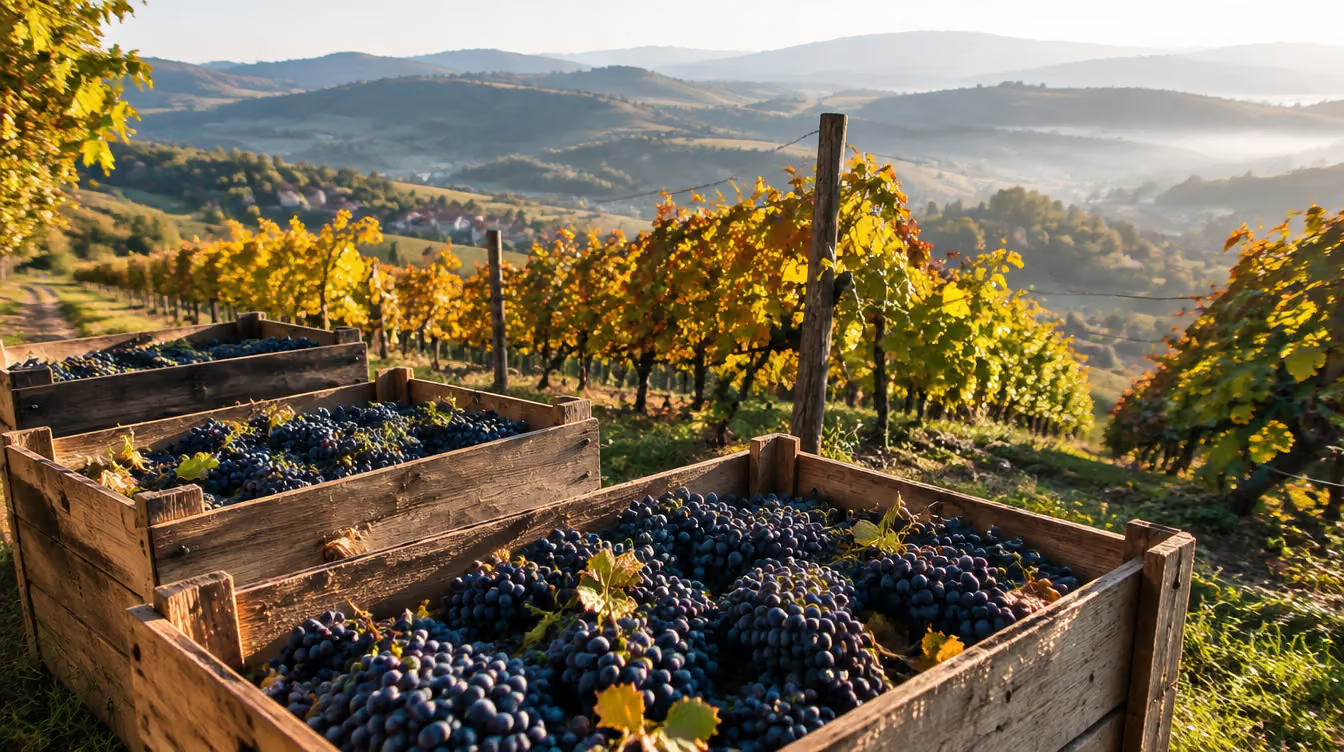
Growing wine is farming, and farming is weather. In a summer with many hours of sun the grapes ripen further: more sugar, less acidity, often fuller and warmer wines. A cooler year brings more freshness and tension to the glass and less weight. Rain just before the harvest dilutes, hail or a late frost cuts the crop, a dry late summer concentrates.
With the wines in our range there is a second factor: they come from very different places. Šumadija around Topola is continental and hilly, Negotinska Krajina in eastern Serbia has sandy and stony soils near the Danube, and Herzegovina has a Mediterranean-influenced climate. A rainy autumn plays out quite differently in those three areas, so no vintage can be judged across the Balkans as a whole.
Which of our wines carry a year
Not every bottle in our range names the vintage openly. These ones do:
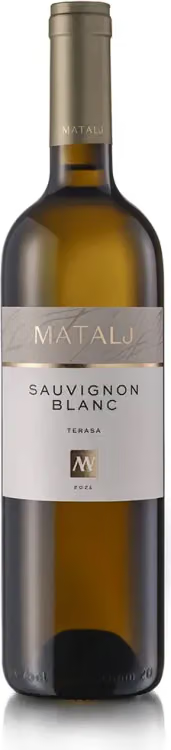
- Sauvignon Blanc 2024 – from the Terasa line of the Matalj winery, on a hill above the Danube near Mihajlovac.
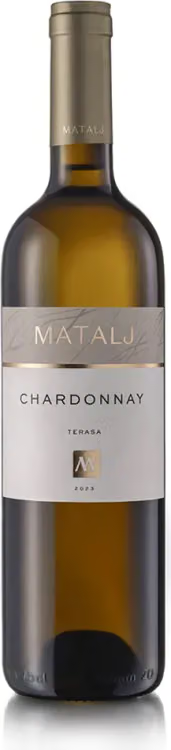
- Terasa Chardonnay 2018 – the same vineyard, a different grape and a clearly older vintage.
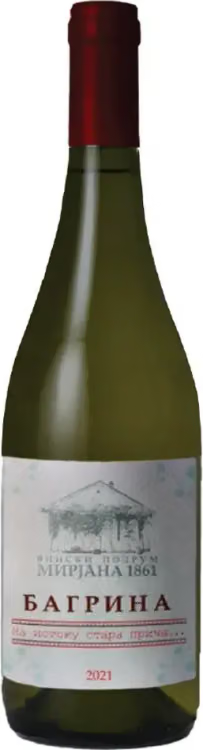
- Bagrina 2021 – a dry white from an old variety at home in eastern Serbia.
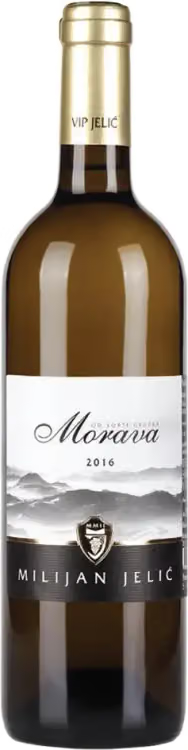
- Morava 2020 – a dry white from Morava, a variety bred in Serbia.
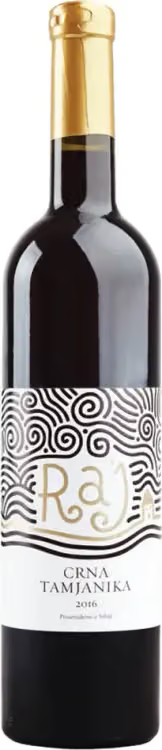
- Crna Tamjanika 2020 – the dark version of the fragrant Tamjanika, here as a dry red.
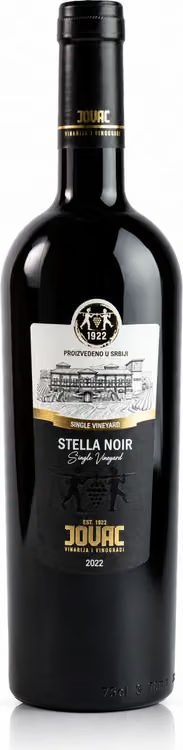
A special case is Stella Noir: with this blend you pick the vintage directly on the product page. If you want to taste two years side by side, this is the easiest way to do it – same wine, same cellar, different weather.
When there is no year at all
A missing vintage is not a bad sign. Many blends are deliberately built from several harvests so the style stays the same year after year, which is the rule for sparkling wines. With fruit brandies a vintage rarely means much; there it is the years of ageing that count. Our Zlatna Nit is a nine-year-aged plum brandy, and Jelicki Dukat matures for twelve.
How long may a bottle lie?
Most whites and rosés are made for their first years and show their fruit best exactly then. Full reds with barrel ageing last far longer; for some of our wines the producers themselves state an ageing potential, for instance up to 15 years for Vukoje Syrah and, in good vintages, up to 30 years for Velika Vukoje Selekcija. Those are ceilings, not obligations: a bottle may be opened whenever you feel like it.
Storing bottles at home
You do not need a vaulted cellar, but a few things help a great deal:
- Cool and steady: between 10 and 15 °C is ideal. More important than the exact number is that the temperature does not swing constantly.
- Dark: direct sunlight and harsh artificial light do damage, especially to pale bottles.
- Lying down with natural cork: that keeps the cork moist and tight. Screw-cap bottles can stand upright.
- Quiet and odour-free: not next to the washing machine, the heating or cleaning products. The kitchen is the worst place in the house.
An opened bottle keeps best tightly closed in the fridge; white wine stays good for two or three days, and a sturdy red often about as long if you let it warm up a little before pouring. The whole range sits in the wine category.
We sell alcoholic beverages only to persons aged 18 and over.