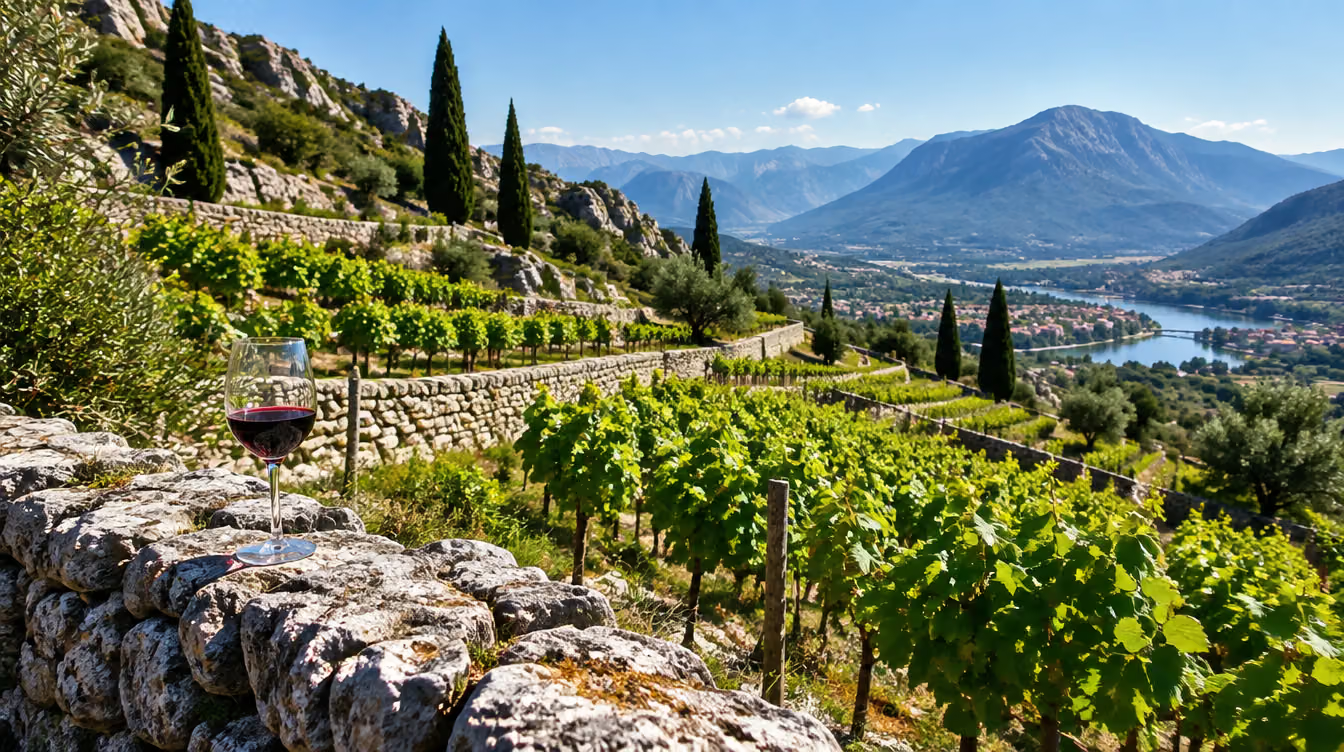
Drive inland from the Adriatic and you notice at once where Herzegovina begins: the ground turns pale, stony and thin, the sun bites harder, and between the slabs of limestone only what can take root survives. Right here, in Trebinje on the river Trebišnjica, the Vukoje family cellar has been working since 1982. It began as a hospitality business with its own wine; only in the mid-nineties did the first bottles under its own label reach the trade.
Karst is not a handicap
For vines this ground is far better than it looks. Limestone stores heat through the day and gives it back at night, it lets water drain instead of holding it, and it forces roots to go deep. Add the closeness of the sea: Mediterranean air, a great many hours of sun, and the bura wind that keeps the fruit dry and healthy. What comes out of it are wines with firm acidity, clear minerality and ripe fruit all at once.
Vukoje farms around 30 hectares across two sites. The cellars lie eight metres below ground, which in a Herzegovinian summer is the simplest and oldest form of air conditioning. The wines are raised both in steel and, in the traditional way, in oak barriques.
The imperial vineyards at Ušće
About ten kilometres from Trebinje, where two rivers meet, lies the Ušće site. In the late nineteenth century the Austro-Hungarian monarchy declared these plots the empire's finest ground for Žilavka and planted what became known as the imperial vineyards. They later fell out of use. Vukoje replanted them, and the first harvest after the revival came in 2007.
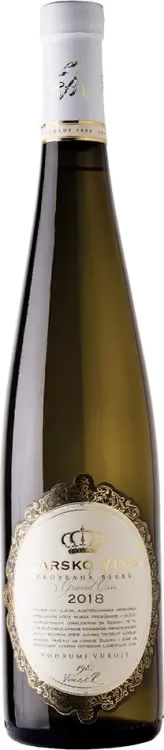
From that site comes Carsko Vino, the imperial wine, 93 % Žilavka with 7 % Bena. History in a glass, and one reason people in wine circles are talking about Trebinje again.
Žilavka: the white grape of Herzegovina
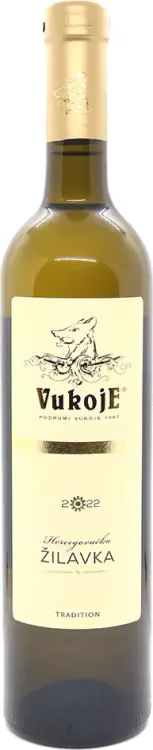
Žilavka is the native white variety of this corner of the Balkans and is grown almost nowhere else. Hercegovačka Žilavka shows why: peach and Herzegovinian herbs, clear minerality, a fresh attack and a fruity, spicy finish. It suits grilled fish, seafood and young sheep's cheese, and it handles summer heat better than most white wines.
Vranac and the reds
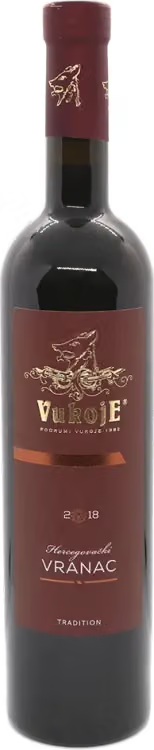
Vranac only reached the Trebinje area around the middle of the twentieth century and found close to ideal conditions there. Hercegovački Vranac is dark, sturdy and distinctive in aroma – a wine for lamb, for slow-cooked dishes and for cold evenings.
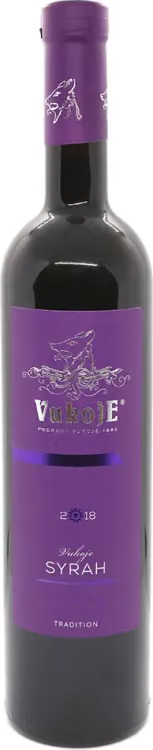
Two further reds sit alongside it: Velika Vukoje Selekcija Crvena, a blend of Merlot, Cabernet Sauvignon, Vranac and Syrah showing blueberry, blackberry, dried herbs and a touch of white chocolate in a deep ruby colour; and Vukoje Syrah, hand-picked in mid-September, classically vinified, spicy and dense.
Serving and pairing
Pour the Žilavka cool but not ice-cold – at six degrees you lose exactly the herbal notes you drink it for. Eight to ten is right. It is the obvious partner for anything out of the water, and it stands up well to pršut and sheep's cheese. Vranac, by contrast, wants sixteen to eighteen degrees and does no harm from being opened half an hour ahead. It is tannic and asks for fat and spice on the plate: lamb baked under the bell, braised meat, goulash, a firm aged cheese.
If you want both in one evening, start with the Žilavka and stay with the reds afterwards. The other way round makes no sense, because the freshness of a white is lost once Vranac has been in the glass.
A cellar you can visit
Vukoje is not an anonymous plant. A restaurant and a tasting room have belonged to the cellar from the start, and Trebinje itself – plane-tree shade, an old town, a market – is one of the pleasantest small towns in the region. Once you have been there, you drink these wines differently.
We carry five wines from Vukoje; all of them are on the Vukoje page. To begin, we would suggest the Hercegovačka Žilavka and the Hercegovački Vranac – one white, one red, both typical of what the karst gives.
We sell alcoholic beverages only to persons aged 18 and over.